


Crystal Healing for Better Sleep: Stones, Placement and Evening Routine
Calming crystals can support a gentler bedtime routine. Here is how to choose stones, place them sensibly and build an evening wind-down that helps you rest.

Half past eleven, and the room is quiet except for your own thoughts. If you have already cut back on caffeine and still find yourself staring at the ceiling, a crystal on the bedside table will not repair a broken sleep pattern on its own. What it can do is give your hands something cool to hold and your evening a clear marker: the day is finished. Think of crystals as part of a wind-down ritual rather than a treatment.
That distinction matters, and it is also why they suit so many people. A stone asks nothing of you. It does not need charging, updating or switching off.
What Crystals Can and Cannot Do
Crystal healing sits in the same family of practices as a warm bath, a heavy blanket or a bedtime playlist: sensory, personal, low-stakes. There is no evidence that the mineral content of a stone changes your sleep, and anyone promising otherwise is overselling. What these objects do well is act as a cue. Hold a smooth piece of amethyst each night before you turn out the light and, after a week or two, the cool weight of it in your palm starts to signal the same thing a particular mug does for your morning coffee.
They also slow you down. Choosing a stone, wiping it clean, placing it deliberately on the bedside table: that is five minutes of unhurried attention, which is often exactly what a racing mind needs at ten o'clock.
One sensible note: if you have been sleeping badly for weeks, or you snore heavily, wake gasping, or feel low during the day, speak to your GP. Crystals are a pleasant addition to a routine, not a substitute for medical advice.
Calming Stones to Start With
You do not need a collection. One or two stones you genuinely like the look and feel of will do more than a shelf of ones chosen because a book recommended them. These six are the most commonly kept for evening use.
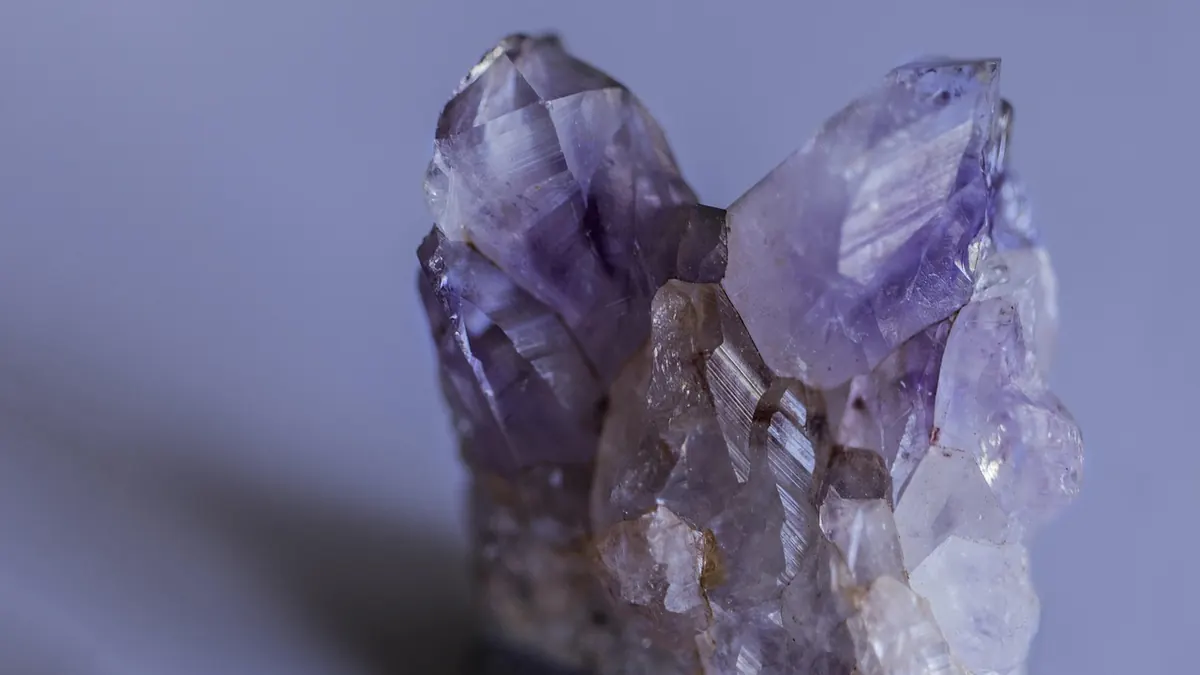
- Amethyst. Purple and widely available, the classic bedside choice. Tumbled pieces are pleasant to hold; a cluster looks good on a windowsill. It fades in strong sunlight, so keep it out of a south-facing window.
- Moonstone. Pale, milky and cool to the touch, traditionally tied to the moon and to gentle rhythms. A good pick if you prefer a stone that feels quiet rather than eye-catching.
- Lepidolite. Lilac with a faint shimmer, usually found as tumbled pieces or small carvings. Traditionally associated with calm and steadiness, and pleasant to roll between finger and thumb.
- Celestite. Soft blue, sometimes almost glassy. Beautiful, but brittle and slightly water-soluble, so it belongs on a shelf or tray rather than under a pillow.
- Howlite. White with grey veining, usually inexpensive and often shaped into smooth palm stones. Ideal if your hands need something to occupy them while you settle.
- Clear quartz. Neutral, easy to pair with anything, and handy if you want a single stone for several purposes.
Where to Place Stones Before Bed
Placement is mostly practicality with a little symbolism thrown in. Work out what you will actually notice, and what you will not knock over in the dark.
- Bedside table. The safest default. A small dish stops stones scratching wood and keeps them from migrating under the bed.
- Under the pillow. Only use a small tumbled stone, ideally inside a closed fabric pouch or beneath the pillowcase itself. Skip this if you have a baby, a toddler or a pet who shares the bed.
- Windowsill or shelf. Best for decorative or fragile pieces such as celestite clusters, where they catch the morning light without being handled.
- Dressing table or bedroom door. A good spot if you want the stone to be the last thing you touch before getting into bed.
One stone is plenty. Three is a collection. Anything beyond that starts to feel like clutter on a surface you look at while trying to switch off.
A Simple Evening Routine
The stones only matter as part of a sequence. Try this, and adjust the timings to suit your household.
- Set a cut-off. Ninety minutes before bed, turn off overhead lights and use lamps instead. Bright light late in the evening is one of the most reliable things working against you.
- Park the phone. Charge it in another room, or at least across the room and face down. This is the step most people skip, and the one that changes the most.
- Pick up your stone. Hold it for a minute or two, feel the temperature and weight, and let your breathing slow. If you like, set a plain intention for the night ahead. "Rest" is enough.
- Place it deliberately. Bedside table, dish, or pouch under the pillow. The same spot each night.
- Read something on paper. Ten or fifteen minutes of fiction beats a screen and gives your eyes a rest from close focus.
- Lights out at a consistent time. A regular wake-up time matters even more than a regular bedtime, so anchor the morning first.
Caring for Your Stones
A quick wipe with a dry or barely damp cloth once a week keeps dust and hand oils from dulling the surface. Water is fine for hard stones such as quartz, amethyst and jasper, but avoid soaking anything soft, salty or layered: selenite, celestite, halite and malachite all suffer. Moonlight on a windowsill is a traditional way to refresh a stone and does no harm. Strong sunlight, on the other hand, can bleach colour from amethyst, rose quartz and smoky quartz.
Never place stones in drinking water, and keep small tumbled pieces away from children and pets who might swallow them. Some minerals are genuinely toxic, and the "crystal water" recipes circulating online are not worth the risk.
Start With One Stone Tonight
Choose a single stone you like the feel of, put it on the bedside table, and attach it to a routine you can repeat tomorrow. The point is not the mineral. It is the pause: lights down, phone away, something cool in your hand, and a clear signal that the day has ended. Give it a fortnight and see how it sits with you. If your sleep is still poor after that, that is useful information too, and a conversation with your GP is the sensible next step.
Photo: Max Vakhtbovych / Pexels